

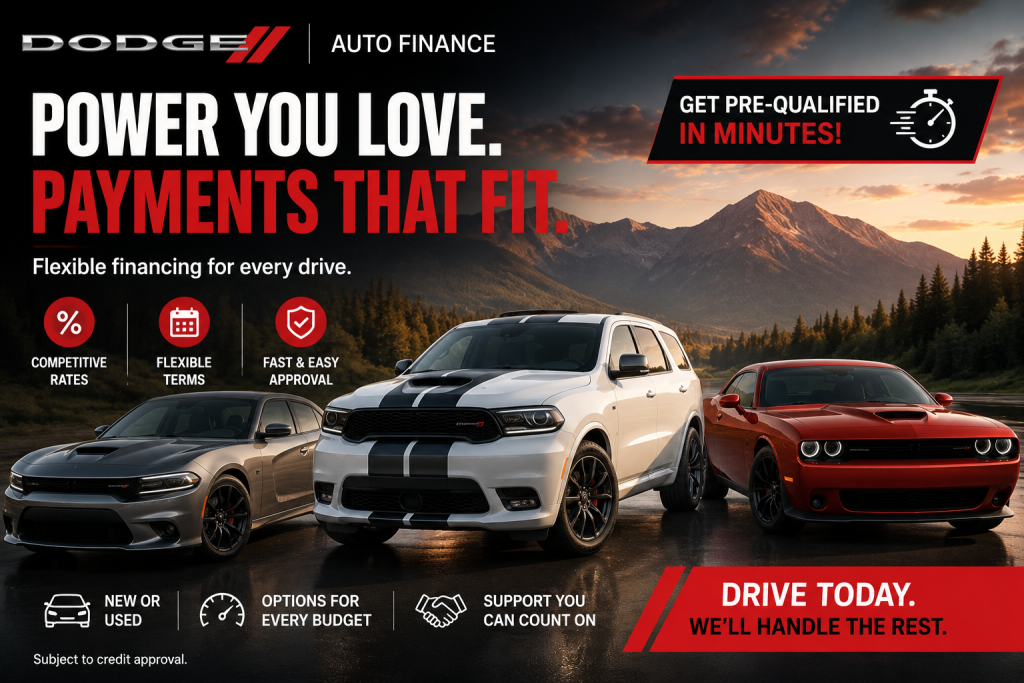
How prequalification works, what purchase and lease terms look like, the upfront costs that sit outside the advertised payment, and the questions that surface the full picture before you sign anything.
Chrysler Capital provides financing and leasing for Chrysler, Dodge, Jeep, Ram and FIAT vehicles at participating dealerships across the United States.
It operates as a subsidiary of Banco Santander, which means it is a captive-style arrangement — the finance company and the brands work together, which brings manufacturer-backed incentives that a bank has no reason to offer.
How to start
There are two routes in.
Prequalify online
The application takes minutes and uses a soft credit pull. You receive a conditional result quickly.
Prequalification does not guarantee that you will receive financing or any particular financing terms. It is an early read, not a commitment from either side.
Apply at the dealership
The alternative is applying on site, where the finance office handles the submission.
Doing it online first has one clear advantage: you arrive knowing roughly where you stand rather than finding out while someone waits.
What eligibility hinges on
Three things drive the outcome, plus one about the vehicle.
- Credit history. The largest single factor.
- Documented steady income. Verifiable, not estimated.
- Residency status.
- The vehicle itself. It must meet the programme rules for the financing type — new, certified pre-owned, lease-end and so on.
Have your documentation ready before you apply: recent pay stubs, a driver’s licence and proof of address.
Purchase financing
Terms are flexible, and that flexibility is the thing to watch.
Shorter terms are common on promotional offers. Longer terms are available, particularly on larger purchases, and can extend substantially.
Why the longest term is rarely the right one
A longer loan always produces a smaller monthly figure. It also:
- Increases the total interest you pay
- Keeps you owing more than the vehicle is worth for longer
- Leaves you trapped if you need to sell or if the vehicle is written off
Decide your maximum term in advance and hold it, because someone will eventually offer you a longer one as a solution to a payment that feels high.
The down payment condition
This is worth asking about explicitly.
A down payment of up to ten percent of the purchase price may be required to qualify for the lowest available rates. On a forty thousand dollar vehicle, that is four thousand dollars.
If you are quoted a rate, ask what conditions attach to it before assuming it applies to you.
Leasing
Lease terms typically run 24 or 36 months depending on the vehicle.
The monthly payment is lower than financing because you are covering depreciation across the term rather than the whole purchase price. That is the genuine advantage.
What you pay before the first monthly payment
Here is where lease advertising and lease reality diverge.
A lease may require:
- A significant upfront payment at signing, which can run into the thousands
- A security deposit, which may be non-refundable
- Taxes, registration and dealer fees
None of this is concealed. It appears in the paperwork. But it is not in the advertised monthly figure, so buyers who budgeted for that number encounter a different one at the table.
Ask for the total due at signing as a single number, early in the conversation.
Mileage
Leases carry mileage allowances with charges for exceeding them.
Work out your genuine annual mileage before choosing. Commute distance times working days, plus trips. Choosing a lower allowance to reduce the monthly payment is the most common lease mistake, and the overage bill arrives all at once at the end.
Lease buyout
If you lease and later decide to keep the vehicle, a lease buyout loan finances that purchase.
This is worth examining rather than defaulting past. Your contract sets a buyout price. If the market value of the vehicle at term end is higher than that figure, buying it out means purchasing at a price agreed years earlier.
Check the current market value against your contract number before deciding.
About promotional offers
Manufacturer-backed incentives are the real advantage of captive-style financing. They can include reduced APRs, cash incentives and lease specials.
Every one of them carries the same qualifiers:
- Model and trim specific, often down to particular vehicles in stock
- For well-qualified buyers. Not all applicants qualify.
- Time limited, with published expiry dates
- Frequently not combinable with other offers
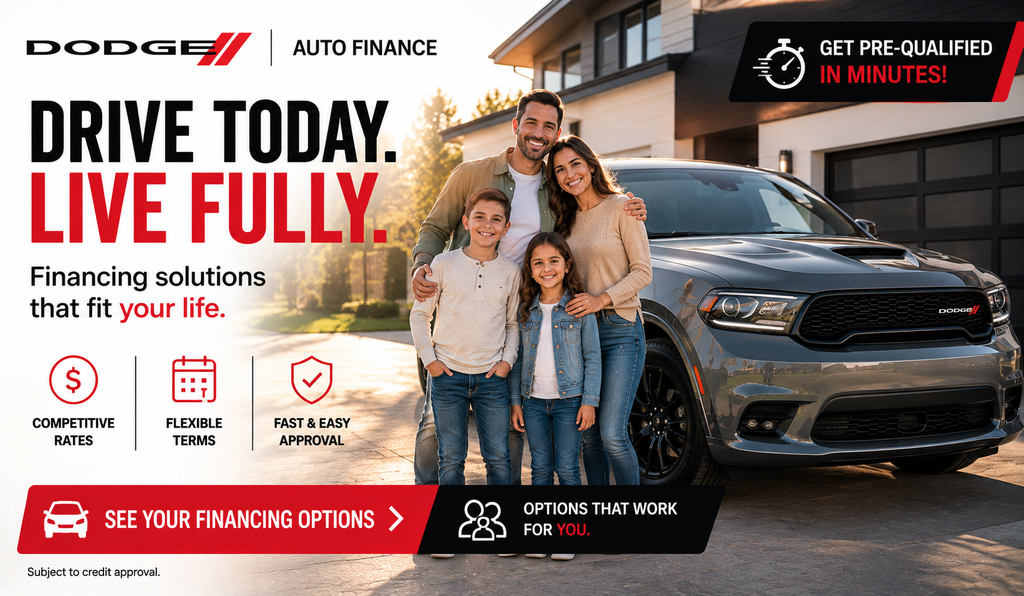
Promotional rate or cash incentive
When both are on the table, they are usually alternatives rather than additions. You choose one.
Which wins depends on the size of the incentive, the rate you could get elsewhere and your term length. Run both totals rather than assuming the lower rate is automatically better.
Employer partnerships
If your employer partners with the manufacturer, a purchase programme may be available offering a price below MSRP.
It is not advertised at the dealership and it is not offered unless you ask. If you work for a large company, it costs nothing to check.
What to ask before signing
- What is the total due at signing? As a single figure.
- Is the security deposit refundable?
- What conditions attach to this rate? Including down payment requirements.
- What is the total of payments? Monthly figure times number of months.
- What is the mileage allowance and the per-mile overage charge?
- Which incentives can be combined?
- Is there a prepayment penalty?
The order that protects you
- Settle the vehicle price first. Before financing enters the conversation.
- Handle the trade-in separately. Two negotiations, not one.
- Then discuss financing, with an outside quote in hand.
- Compare total cost, not the monthly payment.
When all three are bundled together, a win on one quietly disappears into a loss on another.
Watch the aftermarket products
The finance office will offer optional products alongside the financing — extended service contracts, gap coverage, protection packages.
Some have genuine value depending on your situation. All of them get folded into the loan amount, which means you pay interest on them for the life of the loan.
Ask what each costs as a standalone figure, not as a change to the monthly payment. A hundred dollars a month sounds small until you multiply it by seventy-two.
Frequently asked questions
Can I prequalify online?
Yes. Prequalification is available online, takes minutes and uses a soft credit pull. It does not guarantee financing or any particular terms.
Which vehicles are covered?
Chrysler, Dodge, Jeep, Ram and FIAT vehicles at participating dealerships, both new and used.
What credit score do I need?
No minimum is published. The lowest advertised rates go to well-qualified buyers, and a weaker profile generally means a higher rate rather than an automatic decline.
How long are lease terms?
Typically 24 or 36 months depending on the vehicle. Financing terms run longer.
Do I need a down payment?
Not always, but a down payment of up to ten percent may be required to qualify for the lowest advertised rates. Ask what conditions apply to any rate quoted to you.
What do I pay at lease signing?
It varies, but a lease may require a substantial upfront payment plus a security deposit that may be non-refundable, on top of taxes and fees. Ask for the total due at signing.
Can I buy my leased vehicle?
Yes. A lease buyout loan finances that purchase. Compare the contract buyout price against the vehicle’s current market value before deciding.
Can I combine incentives?
Not always. Promotional financing in particular frequently cannot be stacked with cash incentives. Ask which apply to your specific purchase.
Should I compare other lenders?
Yes. Manufacturer incentives sometimes make captive financing the clear winner. Sometimes a credit union beats it. A second quote costs nothing and tells you which situation you are in.
Summary
The monthly payment in an advertisement is one number. The total due at signing is another. The total of payments across the term is a third.
Ask for all three before you decide anything. Ask what conditions attach to the rate you are quoted. And get one outside quote so you have something to measure the offer against.
The paperwork will tell you everything eventually. Asking early just means you find out while you can still change your mind.
Ao clicar,você permanecerá nesse site

 Carvana Financing – The easiest way to drive your next car <p class='sec-title' style='line-height: normal; font-weight: normal;font-size: 16px !important; text-align: left;margin-top: 8px;margin-bottom: 0px !important;'>A plain guide to Carvana financing — soft-pull prequalification, who qualifies, what it costs, the 7-day return window, and what happens after you buy.</p>
  Dodge Auto Loans – Without the Stress <p class='sec-title' style='line-height: normal; font-weight: normal;font-size: 16px !important; text-align: left;margin-top: 8px;margin-bottom: 0px !important;'>How Chrysler Capital financing works for Dodge — soft-pull prequalification, lease terms and upfront costs, down payment conditions, and what to ask before signing.</p>
  Wells Fargo – Auto Loans Made Simple <p class='sec-title' style='line-height: normal; font-weight: normal;font-size: 16px !important; text-align: left;margin-top: 8px;margin-bottom: 0px !important;'>Wells Fargo auto loans work only through dealerships, with no rates published online. How the network works, what that means for you, and how to compare fairly.</p>